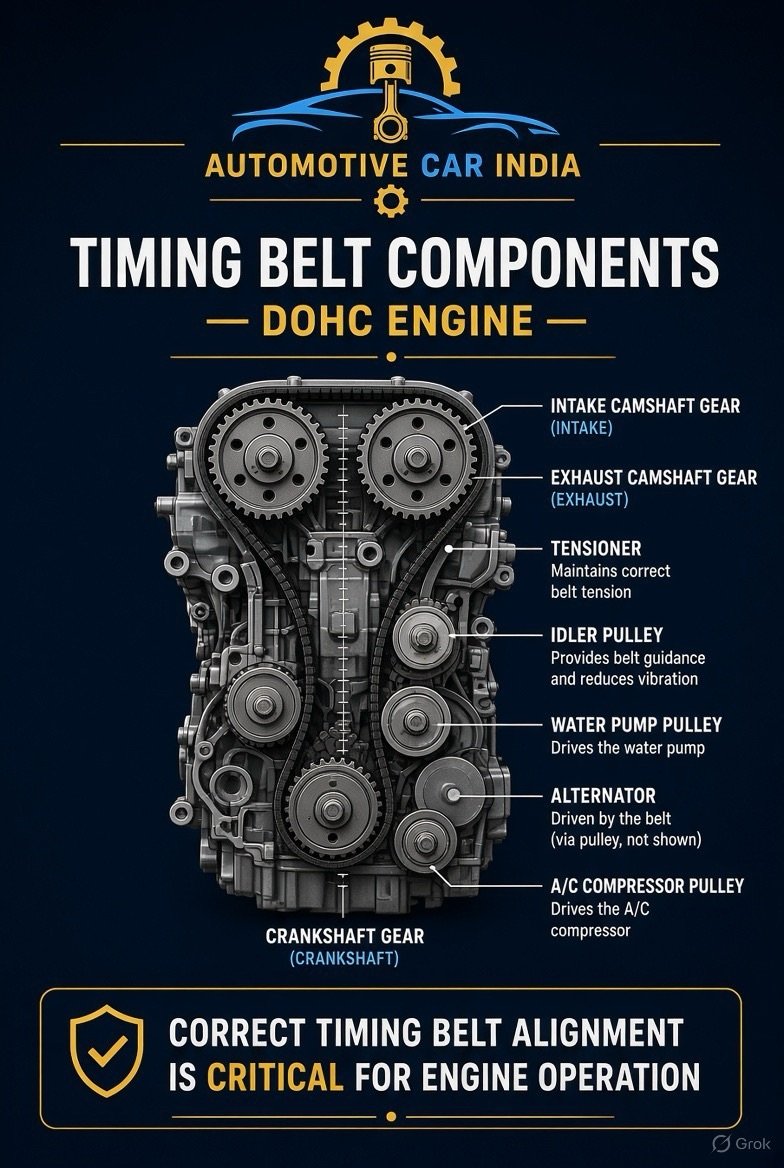
TIMING BELT COMPONENTS — DOHC ENGINE

Read Time:34 Second
⏱️
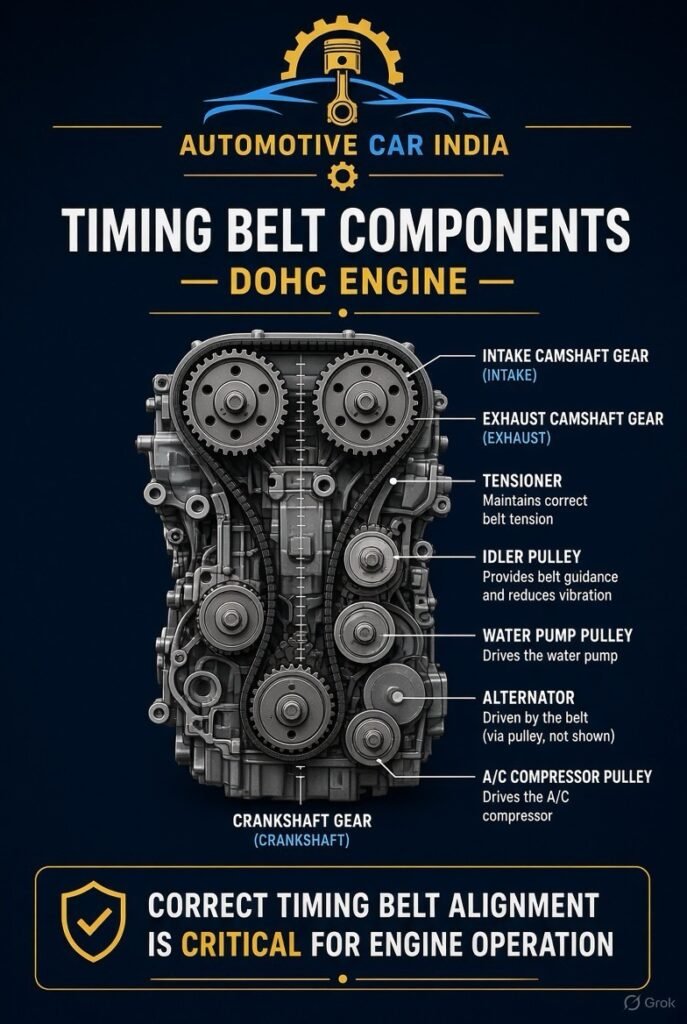
The timing belt keeps the crankshaft and camshafts synchronized, ensuring the valves open and close at the correct time.
🔧 Key Components:
• Timing Belt — Transfers rotation from the crankshaft to the camshafts
• Camshaft Gears — Drive and synchronize the camshafts
• Crankshaft Gear — Drives the timing system
• Tensioner — Maintains proper belt tension
• Idler Pulley — Guides and supports the belt
⚠️ Why It Matters:
A worn, damaged, or incorrectly installed timing belt can cause incorrect valve timing, poor engine performance, or—on interference engines—serious internal engine damage.
💡 Mechanics Tip: Always follow the manufacturer’s timing marks, belt tension procedure, and replacement interval.
Save this for your next timing-belt job! 🛠️
#AutomotiveCarIndia #TimingBelt #DOHC #EngineGuide #Mechanics #Automotive

Happy
0 %

Sad
0 %

Excited
0 %

Sleepy
0 %

Angry
0 %

Surprise
0 %
 0
 0
More Stories
Types of Welding Rods and Their Uses 🔧
Welding rods are essential for safe, reliable metal joining—each electrode is tailored for specific metals, positions, and conditions. E6010 excels for structural repairs, while E7018 delivers strength for bridges. Understanding material needs and welding styles ensures optimal results.
WHAT HAPPENS WHEN THE O₂ (OXYGEN) SENSOR FAILS?
A faulty O₂ sensor disrupts fuel mixture, engine performance, and emissions—triggering the Check Engine Light and poor throttle response. Symptoms include higher fuel consumption, rough idle, and black exhaust smoke. Proper diagnosis with an OBD2 scanner is essential before replacement.
SMALL METAL CAP. BIG JOB.
The radiator pressure cap is essential for your cooling system—it keeps pressure steady as coolant heats up, raising its boiling point and stopping steam buildup. This prevents overheating and protects your engine. Don’t ignore the small parts that make all the difference.
CLUTCH ASSEMBLY EXPLAINED — COMPONENTS | STRUCTURE | WORKING PRINCIPLE
The clutch controls power flow in manual transmissions by linking the engine to the gearbox—discover how the clutch disc, pressure plate, and release bearing work together for smooth gear shifts. Avoid half-pressing the pedal to protect your clutch.
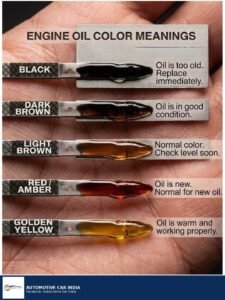
ENGINE OIL COLOR MEANINGS: Decoding Your Dipstick
Engine oil colour reveals engine health: dark brown signals good lubrication, while black indicates contamination requiring immediate replacement. Regular checks help prevent severe wear, especially with diesel engines where soot affects oil appearance. Stay proactive with maintenance to protect critical components.
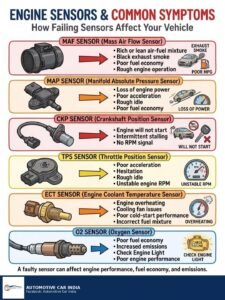
ENGINE SENSORS & COMMON SYMPTOMS — KNOW THE SIGNS!
🚗🔧 A faulty sensor disrupts power, fuel efficiency, and drivability—MAF causes poor MPG, MAP leads to rough running, and CKP triggers hard starts. Don’t jump to replace sensors—first verify wiring, power, and signals. Discover which sensor caused your toughest issue today!
Average Rating