Top 16 Car Smells and What They Mean

Read Time:1 Minute, 15 Second
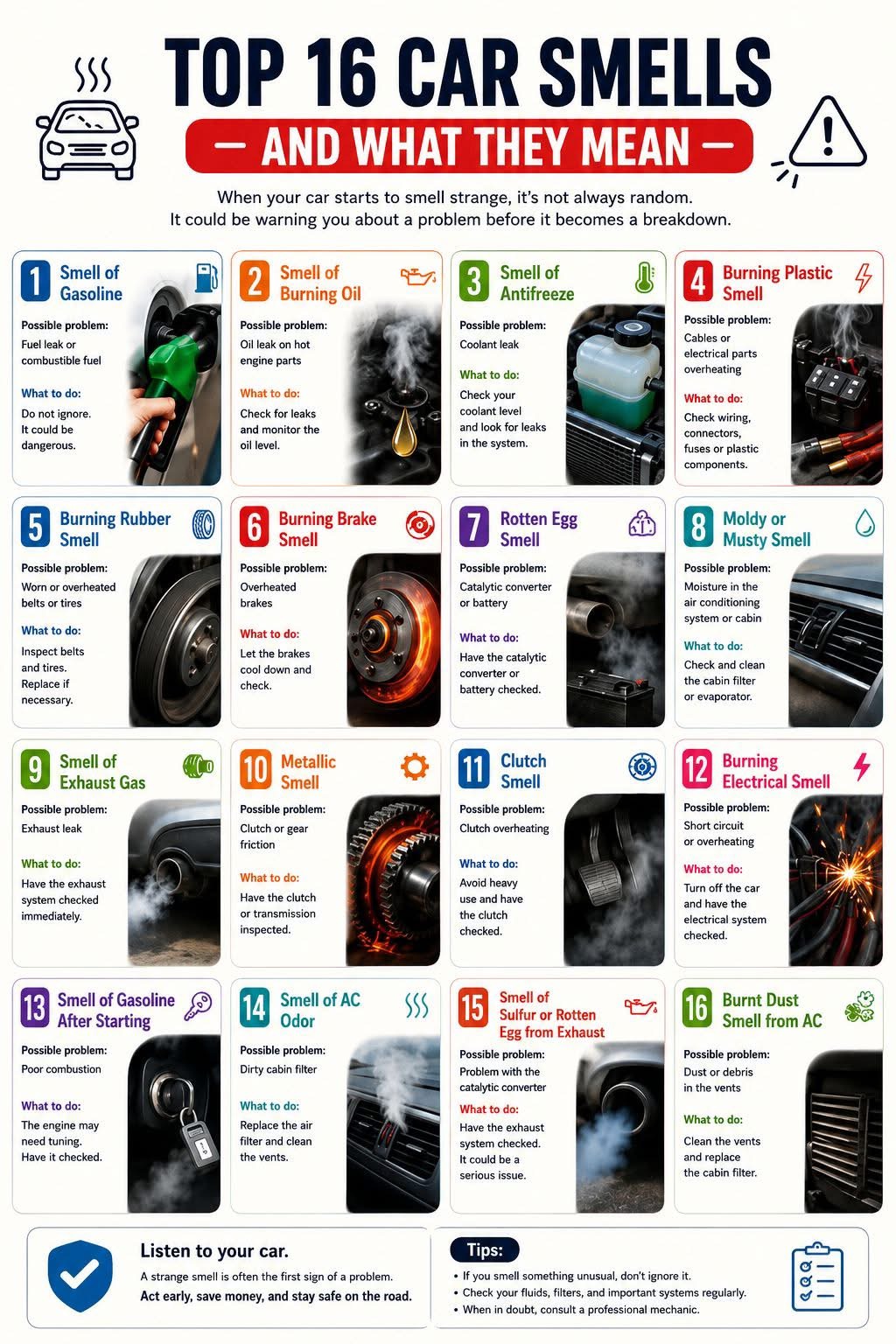
Your vehicle can often warn you about developing problems before a dashboard warning light appears. One of the earliest signs is an unusual smell. Paying attention to these odors can help prevent costly repairs and keep your vehicle safe and reliable.
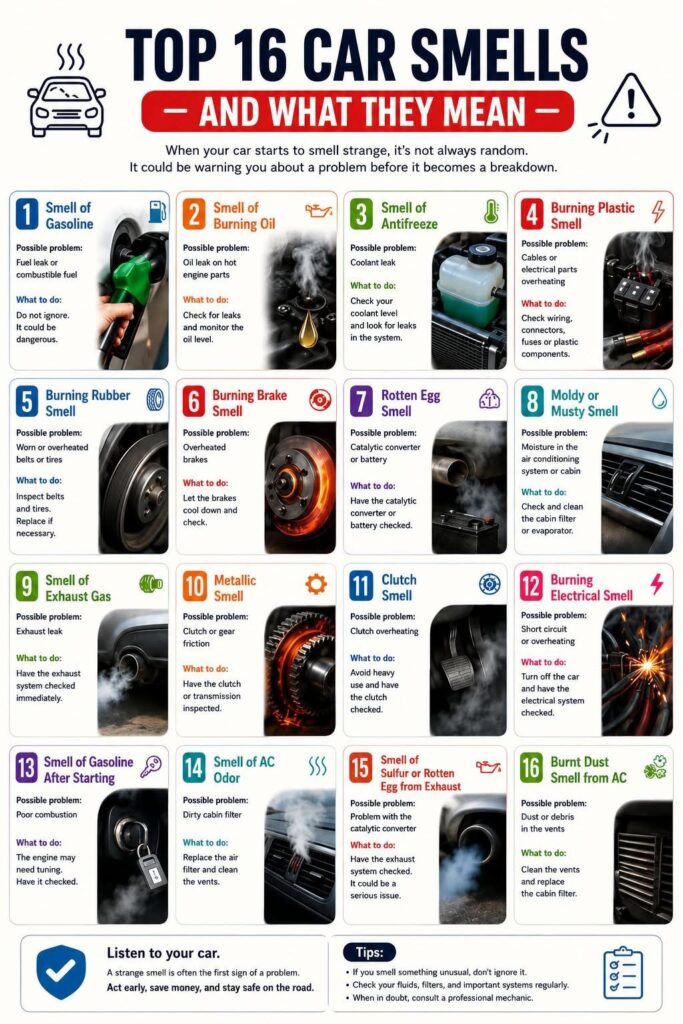
A gasoline smell may indicate a fuel leak, faulty injector, or loose fuel cap. A burning oil smell often points to an oil leak dripping onto hot engine components. A sweet smell similar to syrup usually means coolant or antifreeze is leaking from the cooling system. Burning plastic or electrical odors can indicate overheating wires, damaged connectors, or failing electrical components.
A burning rubber smell may come from slipping belts, hoses rubbing against moving parts, or overheated tires. Burnt brake odors suggest excessive brake heat caused by worn brake pads or sticking calipers. A rotten egg smell often indicates a failing catalytic converter or battery problem. Musty or moldy odors usually come from a dirty cabin air filter or moisture buildup in the air-conditioning system.
Exhaust fumes inside the cabin are particularly dangerous and may signal an exhaust leak. Metallic burning smells can result from overheating gears, bearings, or clutch components. A burnt clutch smell is common in vehicles driven aggressively or on steep hills. Any unusual smell should be inspected promptly.
Remember: strange smells are your vehicle’s way of asking for attention. Early diagnosis can save money, improve reliability, and prevent major mechanical failures. Always investigate unusual odors before they turn into expensive repairs. 🚗🔧⚠️
#cars #carcare #enginerepair #automotivetechnology


Happy
0 %

Sad
0 %

Excited
0 %

Sleepy
0 %

Angry
0 %

Surprise
0 %
 0
0
 0
0
More Stories
Types of Welding Rods and Their Uses 🔧
Welding rods are essential for safe, reliable metal joining—each electrode is tailored for specific metals, positions, and conditions. E6010 excels for structural repairs, while E7018 delivers strength for bridges. Understanding material needs and welding styles ensures optimal results.

WHAT HAPPENS WHEN THE O₂ (OXYGEN) SENSOR FAILS?
A faulty O₂ sensor disrupts fuel mixture, engine performance, and emissions—triggering the Check Engine Light and poor throttle response. Symptoms include higher fuel consumption, rough idle, and black exhaust smoke. Proper diagnosis with an OBD2 scanner is essential before replacement.
SMALL METAL CAP. BIG JOB.
The radiator pressure cap is essential for your cooling system—it keeps pressure steady as coolant heats up, raising its boiling point and stopping steam buildup. This prevents overheating and protects your engine. Don’t ignore the small parts that make all the difference.
CLUTCH ASSEMBLY EXPLAINED — COMPONENTS | STRUCTURE | WORKING PRINCIPLE
The clutch controls power flow in manual transmissions by linking the engine to the gearbox—discover how the clutch disc, pressure plate, and release bearing work together for smooth gear shifts. Avoid half-pressing the pedal to protect your clutch.
ENGINE OIL COLOR MEANINGS: Decoding Your Dipstick
Engine oil colour reveals engine health: dark brown signals good lubrication, while black indicates contamination requiring immediate replacement. Regular checks help prevent severe wear, especially with diesel engines where soot affects oil appearance. Stay proactive with maintenance to protect critical components.
TIMING BELT COMPONENTS — DOHC ENGINE
The timing belt ensures precise valve timing by transferring rotation from the crankshaft to the camshafts—critical for engine performance. A damaged belt can lead to poor performance or severe damage, so always check tension and installation. This guide covers key components
Average Rating